
Norway’s welfare state Is now a derivative of global speculation
Aug 7, 2026
The Norwegian welfare state no longer depends on Norwegians. It depends on Wall Street.
Norway’s oil fund spending rule (Handlingsregelen) was a stroke of genius. The problem is that it was designed for a world where capital generated income, but now operates in one where capital mostly generates capital gains
This turns the world’s safest public spending rule into a risky gamble
In the 90s Norway realized oil revenues created volatility in its economy and budget. To prevent politicians from spending freely, they created a pact: spend only what the fund could sustainably generate. In the early 2000s, they estimated a 3–4% return and created a formula: tax revenues plus 3% of the fund. Income would finance the welfare state while capital remained protected for future generations. It was a brilliant design
The problem is that around the same time the global economy shifted from productive to financial capitalism
Under productive capitalism, the logic was: Capital → Investment → Productivity → Profits → Dividends → Income. You invest in a company, it produces more, earns more and pays returns. Wealth grows because society creates value
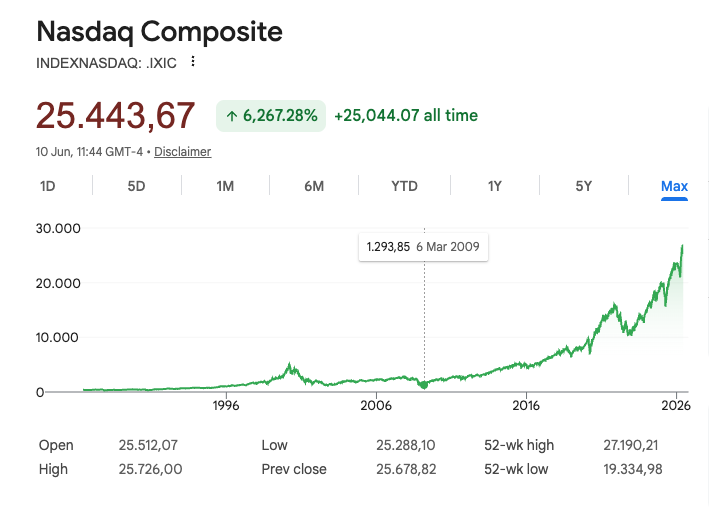
In financial capitalism, the logic is: Liquidity → Credit → Asset Inflation → Higher Valuations. Assets rise not because they generate income, but because cheap money pushes investors to pay higher prices. Capital prices stop reflecting productivity and become driven by liquidity in a credit boom
A safe rule thus becomes a systemic risk. Spending 3% of an asset’s income is different from spending 3% of its market value
Imagine shares worth $1 billion generating $30 million in dividends. If liquidity pushes their value to $5 billion, withdrawing 3% means taking $150 million, even though income remains $30m
The rule was designed to live from asset rent. Instead it now works like selling a piece of the building every year because property prices keep rising. It confuses market value with sustainable income creating an illusion of wealth that finances the Norwegian state
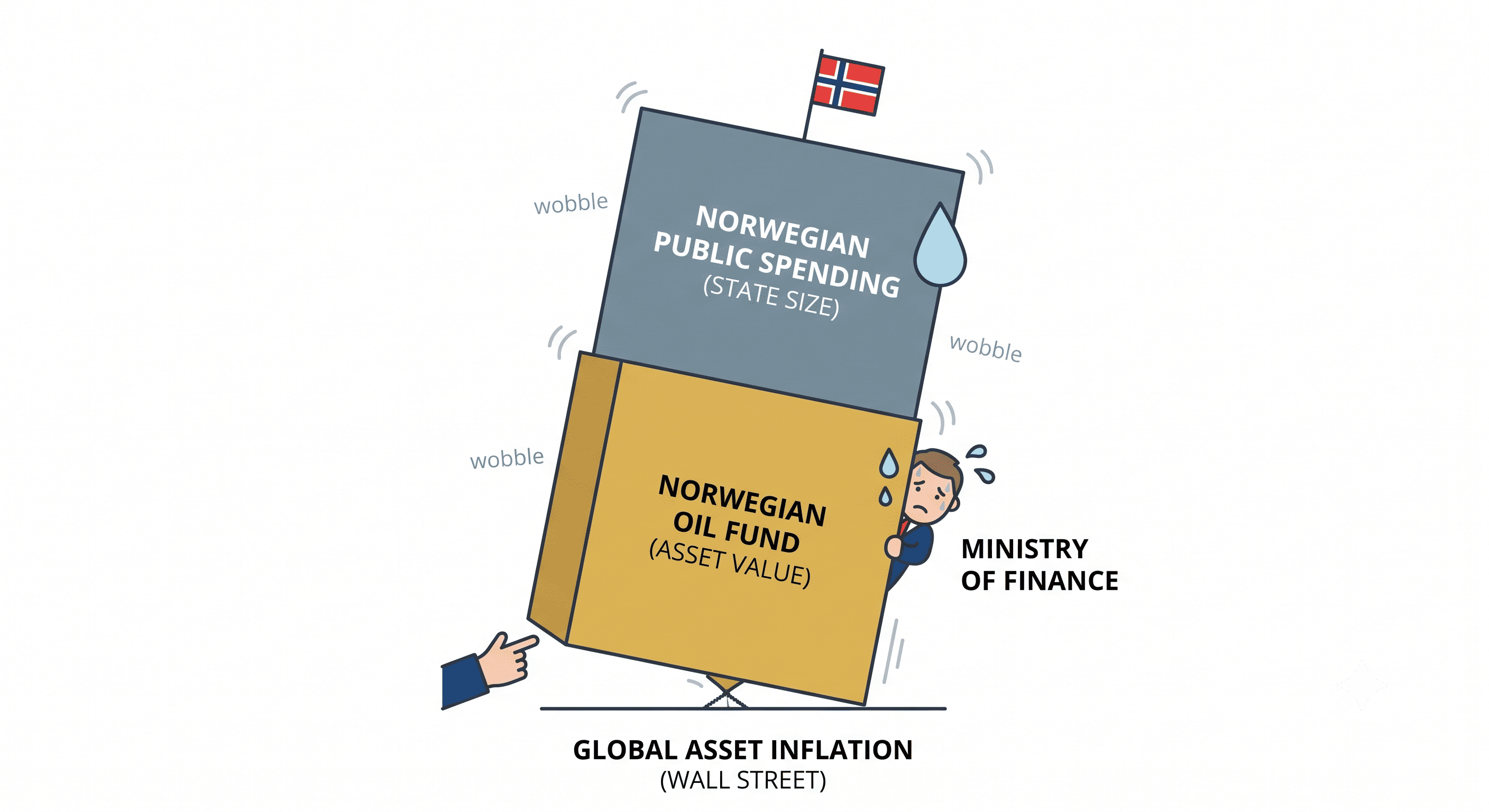
While tax revenues have remained stable, spending funded by the 3% rule has grown to nearly 30% of public spending. The rule links state growth to assets inflation, tying citizen welfare to Wall Street valuations
The original goal was noble: protecting Norway from oil volatility. But it replaced one dependency with another: crude oil with financial liquidity. Leaders thought they were spreading risk across assets but concentrated it into one force: credit expansion
This dynamic breaks the principle of the welfare state. A fair social contract relies on mutual effort and productivity within a predictable democratic system
By linking public spending to asset valuations, social benefits no longer depend only on Norwegian workers, companies or tax revenues. They also depend on Federal Reserve decisions and global asset inflation. A social right becomes a financial derivative of speculation
The real risk of the Handlingsregelen is that it ties citizen welfare and dignity to an external force Norway cannot control, produce or predict
More posts about the topic
.png)