
What If central banks are creating the problems they try to solve?
Jun 27, 2026
If that is true, the most dangerous assumption in modern monetary policy might be that central banks need to manage the economy at all
Modern central banking has a strange contradiction at its heart
Central banks exist because we believe the economy can be managed. If growth slows, they cut interest rates. If inflation rises, they raise them. If markets panic, they inject money. The idea is simple: change incentives and people change how they act
And they do. But that is where the real problem starts
Central banks don't just affect our decisions, they change the environment where those decisions are made. Every intervention alters incentives, which slowly reshapes behavior across the entire system
If the economy were a machine this wouldn't matter much. Machines don't adapt to policies, predict interventions or change due to new rules. But human beings do
When money stays cheap for years, taking on debt makes sense. When investors expect a rescue during a crisis, taking bigger risks makes sense. When liquidity appears in time of trouble, relying on it makes sense
People aren't just being careless. They are acting logically in a world where incentives have been changed on purpose
The problem is that how people act today results from yesterday's policies. Intervention changes behavior, behavior changes the system and that altered system requires new intervention
Over time the line between the manager and the managed begins to blur
This is where the usual story breaks down. Policymakers talk as if they look at the economy from the outside, adjusting it when necessary
But they are not outside, they are inside. Every action changes what they observe. The more they influence behavior the more they change the system they want to understand
The direct results are easy to see: a recession is avoided, a panic ends, markets calm down
But the hidden results are much harder to see. Which investments only existed because money was cheap? Which risks were taken expecting a bailout? Which companies survived only because easy money kept flowing?
These effects take years to show up. By then few people connect them to the old policies that caused them
This raises an uncomfortable question: How much economic trouble comes from outside shocks and how much comes from decades of interventions that slowly changed behavior in ways nobody fully understands?
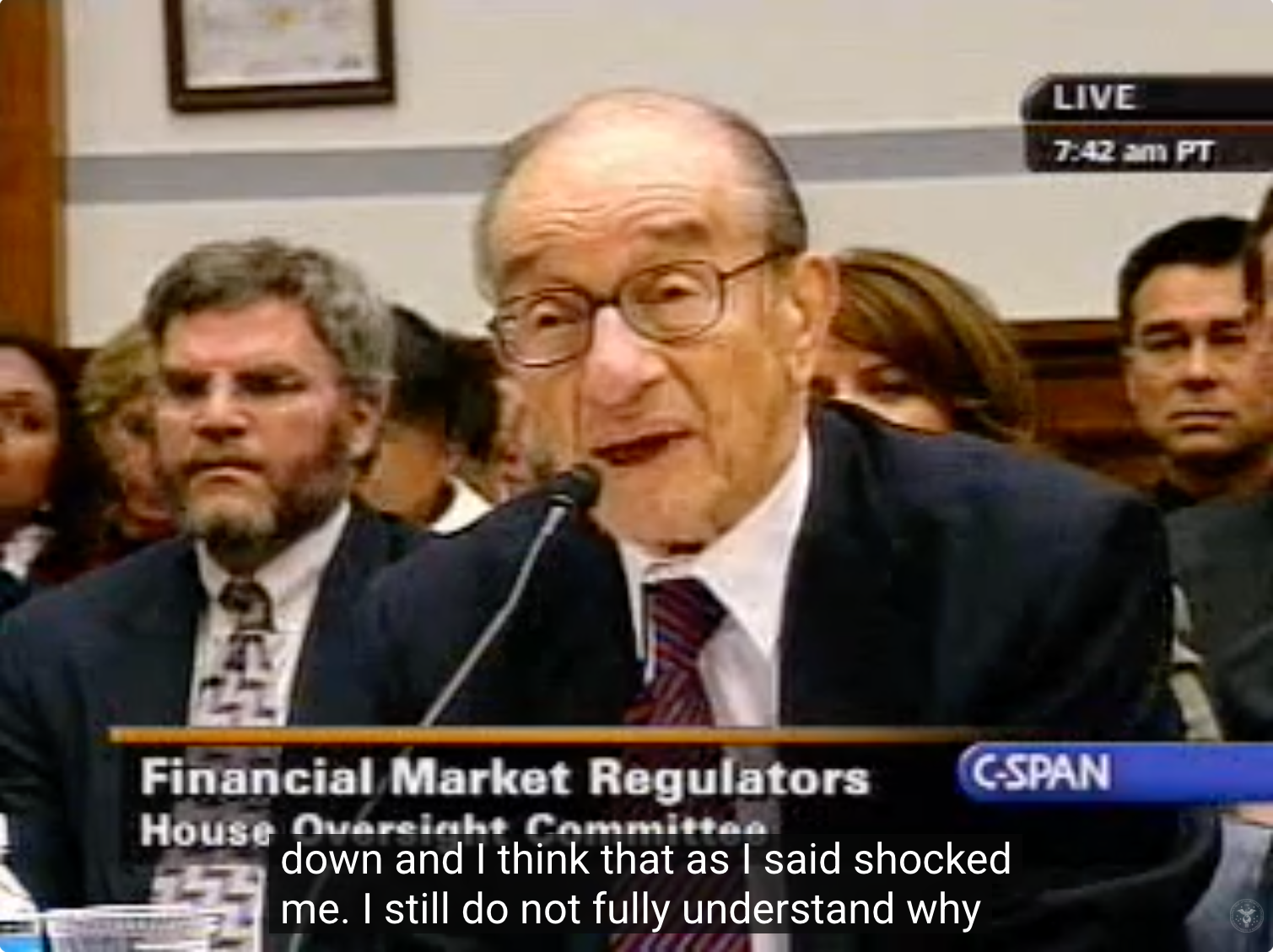
Alan Greenspan is the perfect example. For 18 years he ran the US FED Reserve, seen as the man who understood the economy best. His choices moved markets and shaped expectations
Yet after the 2008 financial crisis explaining what went wrong to Congress, he admitted something shocking: he didn't fully understand why it happened
Maybe we shouldn't be surprised. He was trying to guide a system of millions of people who had spent decades adapting to his own decisions
The paradox then is that the more central banks try to guide the economy, the more they change the very system they are trying to guide
And if that is true, the most dangerous assumption in modern monetary policy might be that central banks need to manage the economy at all
More posts