
Learning about systems by comparing Nordic asylum systems
May 30, 2026
Understanding how the systems affecting you are designed and, above all, who is designing them is more important than you think.
I love systems. Because if you understand how a system is built, you understand its real-world consequences—and, most importantly, you understand how to fix it. Let me show you why this is so cool:
Imagine this scenario: three neighboring countries (Sweden, Denmark, and Norway). They share roads, bridges, and trains. There are no physical borders between them. Their culture, history, and languages are almost identical.
How is it possible that, despite sharing the exact same open space, only one of them has a massive safety and immigration problem?
Let’s look at the numbers. Sweden’s gun murder rate is 4 times the European Union average. In cities like Gothenburg or Malmö, gang violence and bombings have become a statistical outlier in Europe. In Denmark and Norway, the numbers aren't even close.
Why does this happen? The answer is never about ideology. The answer is always in the systems.
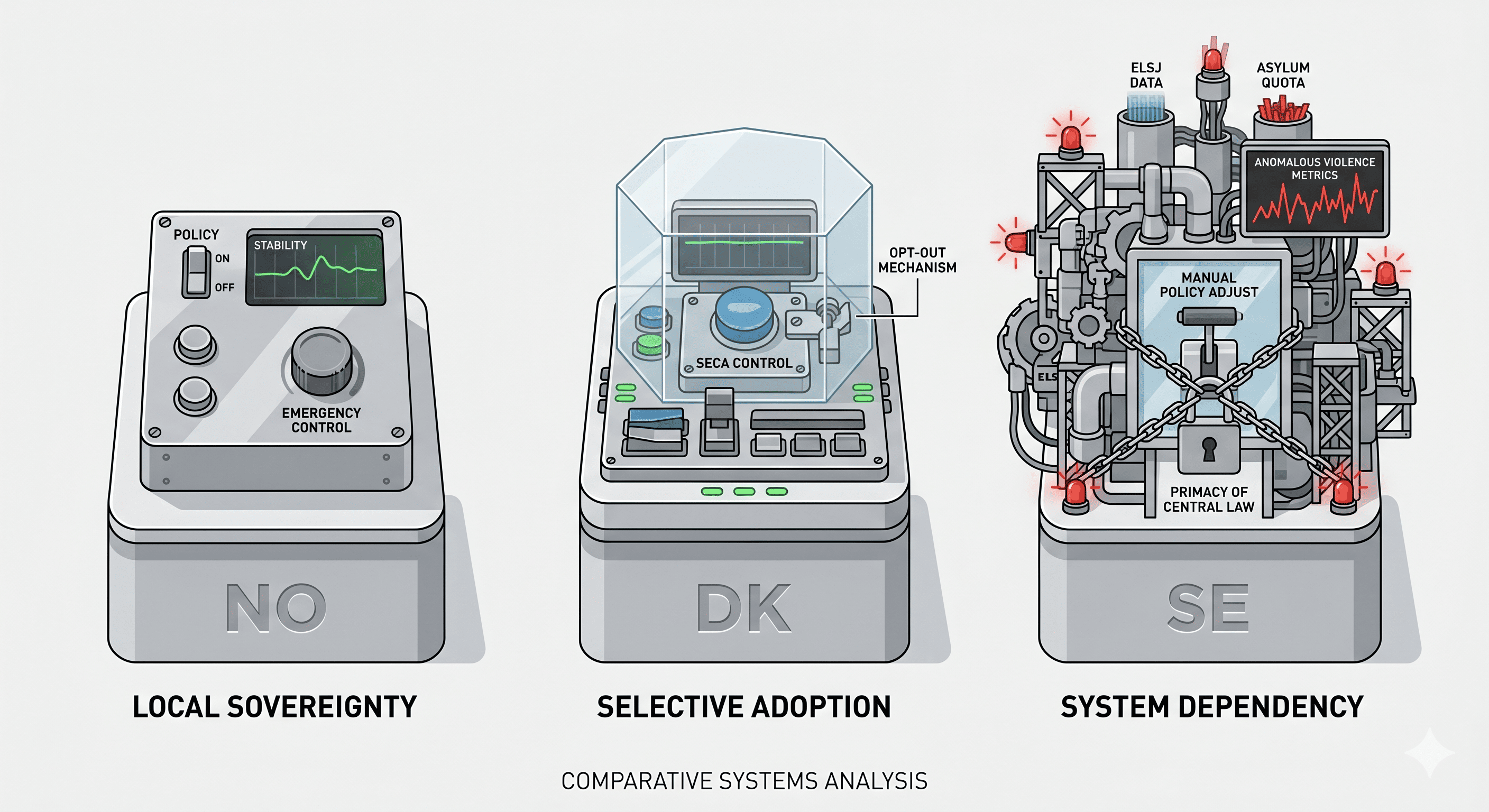
Even though these three countries look the same from the outside, they operate under three totally different sets of rules:
Norway’s system (Outside the EU) Norway is not a member of the European Union. To trade and connect with its neighbors, it signed the European Economic Area (EEA) agreement. What does this mean in practice? Norway accepted the Schengen Area (free movement of people) and the Dublin Regulation (asylum coordination). But—and here is the key to the design—it keeps 100% control over its own immigration laws. If the parliament in Oslo decides tomorrow to cut welfare benefits or deport a foreigner for security reasons, it happens immediately. Its system has total control over its immigration valves.
Denmark’s system (In the EU, but "à la carte") Denmark is in the EU, but when the treaties were negotiated in the 1990s, it was a very picky player. It said yes to some things and no to others. Its biggest "no" was to the EU's common laws on security and justice, meaning it opted out of the EU's shared asylum system. The practical result? Denmark is immune to Brussels' immigration rules. It can hand out strictly temporary residence permits, cancel asylum unilaterally, or make laws so tough that they discourage people from coming in the first place. Its system is protected by a legal firewall.
Sweden’s system (The full package) Sweden joined the EU and signed up for the whole menu, including those common security and justice laws. What does this mean in practice? It means Sweden handed over control of its asylum policy to a centralized European system, based on the idealistic idea that external borders would never fail. On paper, the design was simple: the first country of entry registered the migrant, and the EU set a mandatory floor for aid and benefits.
But—and here is the massive design flaw—the system had no backup plan. When real pressure hit during the 2015 crisis, this entry filter broke down completely. Southern countries were overwhelmed and let crowds of people pass freely on trains to the north without any checks. And when Sweden got overwhelmed and tried to activate its own defenses by tightening local rules, it discovered that EU law legally banned it from dropping below that mandatory minimum for aid and family reunions. Without an emergency button or local control, the Swedish system was completely trapped by its own rules in a contract that ultimately overwhelmed it.
Sweden's big problem today? No matter how much its current government realizes it needs to get tough and slow down immigration to stop the violence, legally, it CANNOT do it quickly.
As long as it is an EU member, EU law comes first. Sweden's national laws are tied to the humanitarian and family reunion minimums required by Brussels. If Sweden wants to change the rules of the game, it doesn't depend on its own parliament: it has to get dozens of countries to agree in a long, uncertain process that requires approval from the European Parliament and a specific majority of EU governments.
The bottom line is that Denmark and Norway kept the right to design and change their own systems, while Sweden gave it away. In the end, Sweden didn’t just give up the design of the system—it gave up the power to fix it when it breaks.
That is why, my friends, it is so important to understand how the systems affecting you are designed and, above all, who is designing them.
More posts about the topic