
Why the EU needs to overcome its fear of scarcity
May 20, 2026
The current approach is a paralyzing strategy. When you design your future exclusively to "not lose," your only possible destination is mediocrity.
Personally, I think the EU's entire competitiveness strategy is fundamentally wrong. Why? Because it is based purely on our collective fear of scarcity.
I am talking about the famous European competitiveness report presented by Mario Draghi at the request of the European Commission—a plan that member states have been using to align their policies and seal their commitments throughout 2025. The core issue here isn't technical; it's psychological.
The fear of scarcity is perhaps the most deeply rooted human emotion; I would argue it drives us even more than love. It is a primitive fear inherited from our caveman ancestors, who learned the hard way that if they didn’t store food for the winter or got kicked out of the tribe, they died.
Because of this, evolution wired our brains with a hyperactive alarm system. The problem is that our modern brain cannot tell the difference between a charging mammoth and US tariffs on European goods. To your amygdala, both feel like an immediate threat to your survival. As a result, we spend massive amounts of energy focusing only on what we lack, because that is what kept us alive in the past.
The European competitiveness plan relies on this exact same caveman logic. It is not a strategic vision born out of optimism, progress, or a desire for greatness. Instead, it stems from a primitive fear of the void and a panic over losing what we have.
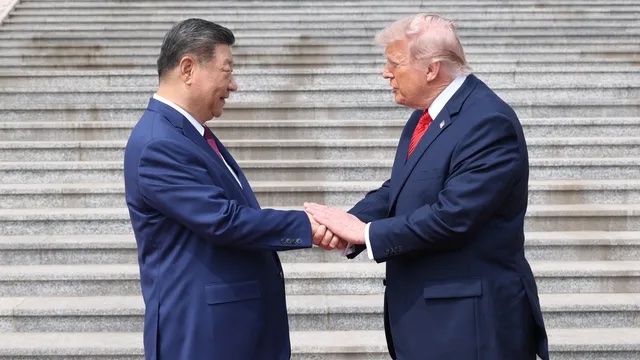
This strategy does not aim to create anything genuinely new. Its only goal is defensive: to avoid losing our current standard of living, to stop Europe from becoming a mere museum for tourists, and to prevent us from becoming an economic colony of Washington or Beijing.
There is a massive difference between shaping the future because you want to become something great, versus doing it just to avoid losing what you used to be.
You might ask: What’s wrong with a defensive strategy when the world is a tough place? The problem with playing defense comes down to three fundamental reasons:
1. It makes you vulnerable to blackmail. On an individual level, when your number one priority is survival at all costs, you become easy to manipulate. You will accept a job you hate, tolerate a toxic boss, or stay in a soul-crushing relationship just because fear tells you that you will starve if you leave. Overcoming that fear is the only way to be unbribable.
The exact same thing is happening to the European Union. The fear of falling behind forces Europe to accept lopsided, terrible bilateral trade deals. Everyone knows they are bad, but we swallow our pride and sign them because panic tells us the future could be even worse. The fear of scarcity makes us a geopolitical target for blackmail.
2. It kills creativity. No one can create anything brilliant, innovative, or disruptive when they are stuck in "survival mode." When you fear scarcity, you play not to lose. But to build great things, you need to play on the offense, take risks, and embrace uncertainty. If the brain is busy panicking, it has no energy left for big ideas.
The EU is doing nothing to build a high-risk, high-reward creative environment. Instead, it is micromanaging the economy toward "safe" sectors and heavily cutting spending on public services—as we see with austerity policies in Germany. The hidden message to citizens is: "We are in a crisis, you're on your own." By trying to eliminate risk, they are killing innovation.
3. True security never comes from the outside. We have been taught that security means accumulating external things: a permanent contract, a degree, or money in the bank. But that is an illusion because anything external can vanish in a second. The only real security is trusting your own ability to reinvent yourself—knowing that if everything material is taken away, you are still smart, still alive, and can start over from scratch. Once you realize that, the fear breaks.
Instead, the EU acts like a panicked person running to stock up a bunker. It desperately rushes to lock down global alliances with Mercosur or India just to secure raw materials and external markets to ease its anxiety. They cling to outside resources because they don't trust what is inside. A confident Europe wouldn't beg for resources abroad. It would trust the priceless value of its own people, their education, their talent, and their collective ability to reinvent themselves in any crisis.
In short, the current approach is a paralyzing strategy. When you design your future exclusively to "not lose," your only possible destination is mediocrity.
The official narrative says: We must compete against the US and China, or we will become irrelevant. I say: We must overcome our fear of scarcity, or we will become irrelevant.
More posts about the topic

.PNG)